Vegga Tours & Traveling
Climbing Kilimanjaro
The Roof of Africa
Mount
Kilimanjaro
Rising alone from the plains of northern Tanzania, Kilimanjaro is built from three volcanic cones — Kibo, Mawenzi and Shira — with Uhuru Peak on Kibo’s crater rim as its highest point. The mountain and its forests are protected as Kilimanjaro National Park, a UNESCO World Heritage Site.
A climb here is a long walk rather than a technical ascent, and altitude is the real challenge. Summit night usually starts around midnight so you reach the rim by sunrise, and a slow pace, plenty of water and an extra acclimatisation day all improve your chances of standing on top.
- Uhuru Peak
- 5,895 m
- To the Summit
- 6 Routes
- Of Climate
- 5 Zones
Routes to the Summit
Each route has its own character, scenery and pace. We will help you choose the one that suits your time, fitness and sense of adventure.
Machame Route
The Whiskey Route
6–7 days · Camping
Our most requested route: scenic and varied, crossing the Shira Plateau and the Barranco Wall with a proven climb-high, sleep-low profile.
Marangu Route
The Coca-Cola Route
5–6 days · Huts
The oldest trail on the mountain and the only one with dormitory huts. Gentler gradients, but a quicker ascent leaves less time to acclimatise.
Lemosho Route
The Western Approach
7–8 days · Camping
Begins in remote western forest and crosses the full width of the Shira Plateau. Quieter trails, huge views and excellent acclimatisation.
Rongai Route
The Northern Approach
6–7 days · Camping
The only route that starts from the north, close to the Kenyan border. Drier and less crowded, with a gentle ascent and a descent via Marangu.
Umbwe Route
The Steep Ascent
6 days · Camping
Short, steep and direct up the southern slopes. Best for strong, experienced trekkers who have already spent time at altitude.
Northern Circuit
The Grand Traverse
8–9 days · Camping
The longest route, circling the quiet northern slopes before the summit push. The extra days give the best acclimatisation of all.
What to Expect on the Mountain
- 01
Cultivated Foothills
The drive to the gates passes coffee and banana farms on the fertile lower slopes, where Chagga communities have farmed for generations.
- 02
Rainforest
Warm, humid and green, the forest belt is hung with moss and home to blue monkeys, colobus and turacos. Expect mud after rain and mist in the afternoons.
- 03
Heather & Moorland
Above the trees, giant heathers give way to open moorland dotted with giant groundsels and lobelias. Nights turn cold and the views begin to open.
- 04
Alpine Desert
Bare rock, scree and very little water. Days can be hot under a fierce sun and nights drop well below freezing, so layering becomes essential.
- 05
Arctic Summit
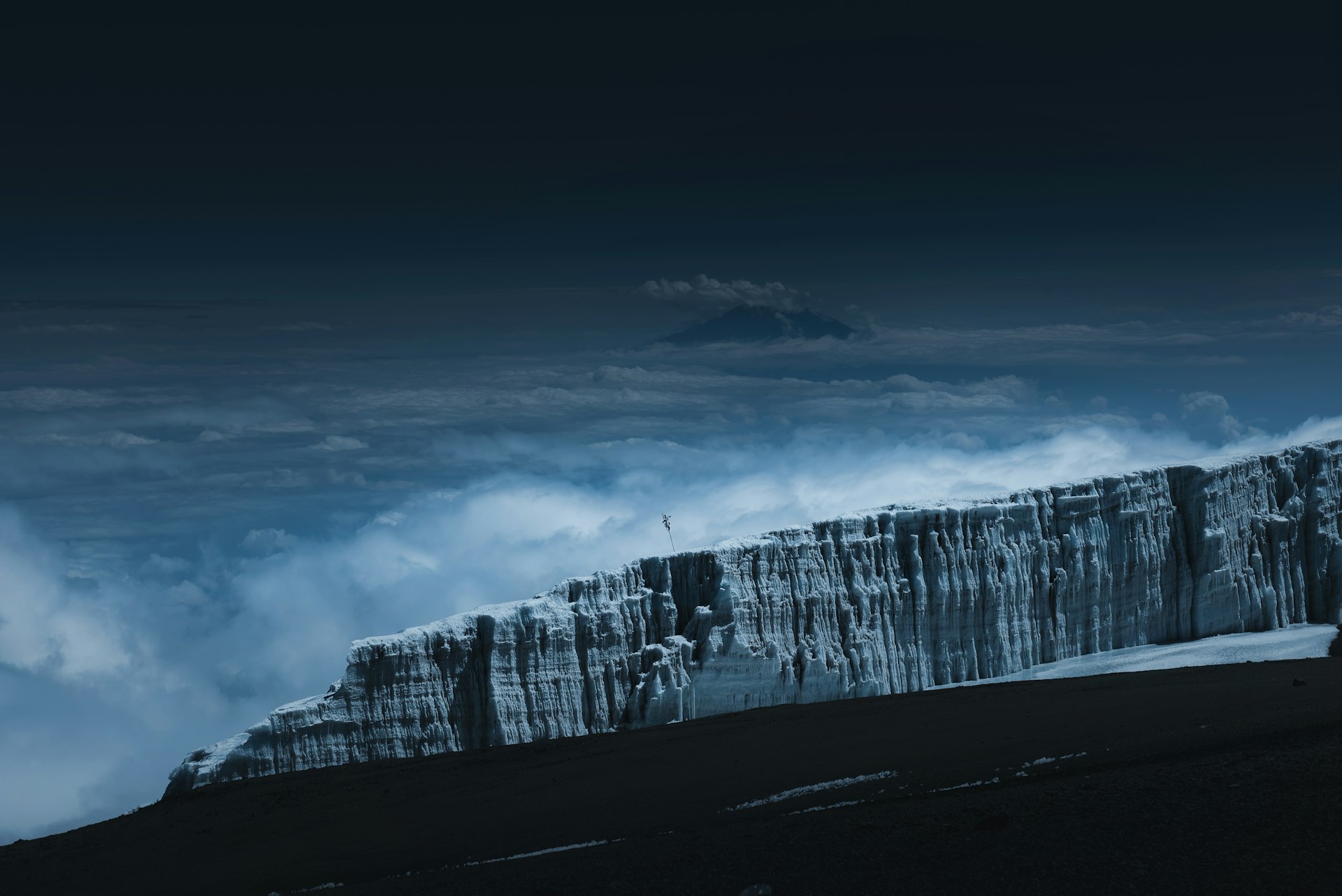
Above about 5,000 m the air holds roughly half the oxygen of sea level. Glaciers and ice cliffs ring the crater rim on the final push to Uhuru Peak.
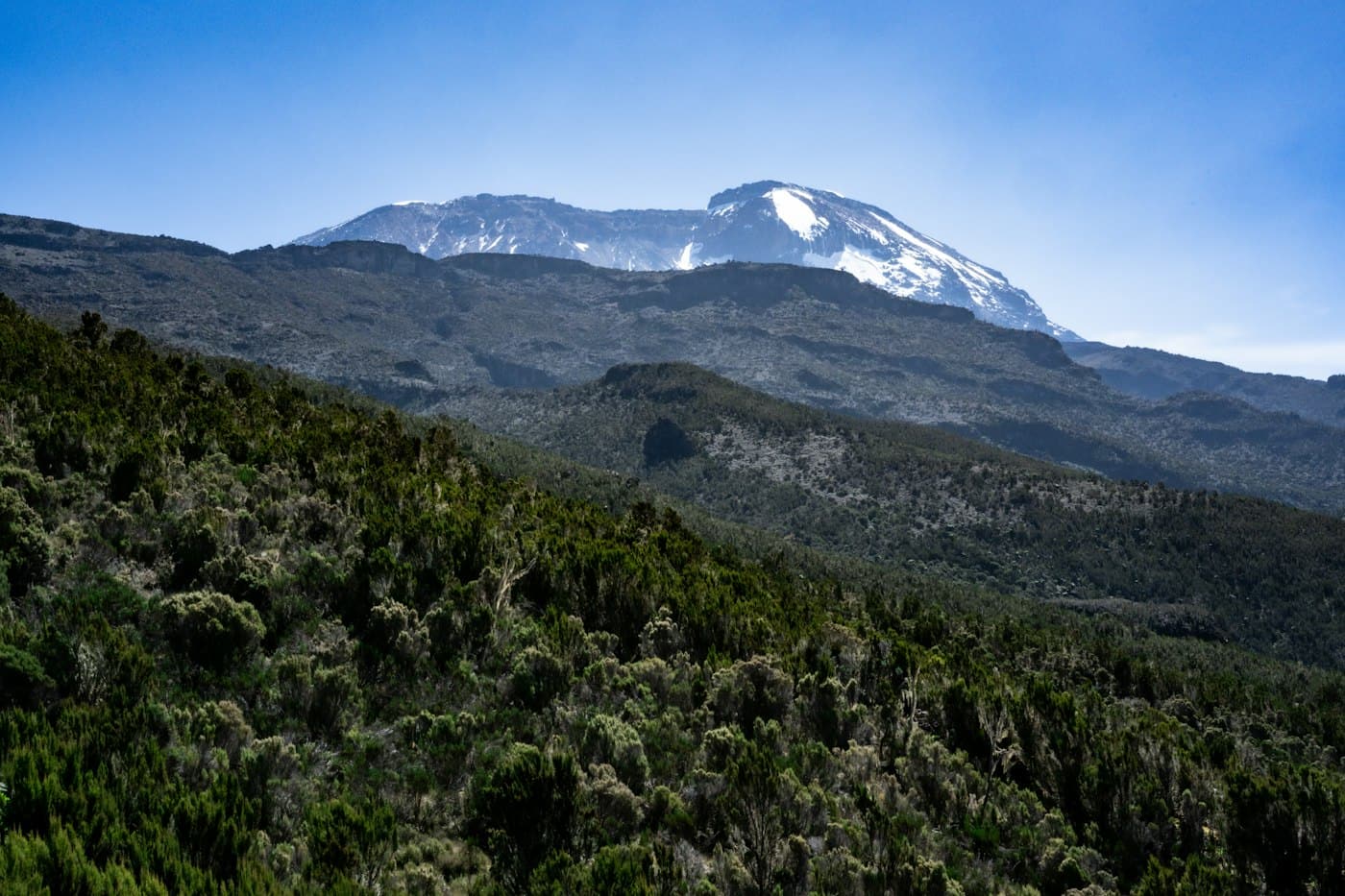 Uhuru Peak · 5,895 m
Prepare for the Climb
Our Trekking
Packing List
Warm layers, broken-in boots, a trusty headlamp — our checklist covers everything you need from the rainforest gate to the frozen summit.