- Habitat
- Woodland & savanna
- Weight
- 18–36 kg
- Diet
- Impala & medium antelope
- Lifespan
- Around 10 years
- Social Life
- Packs
Scientific Name
Lycaon pictus
IUCN Status
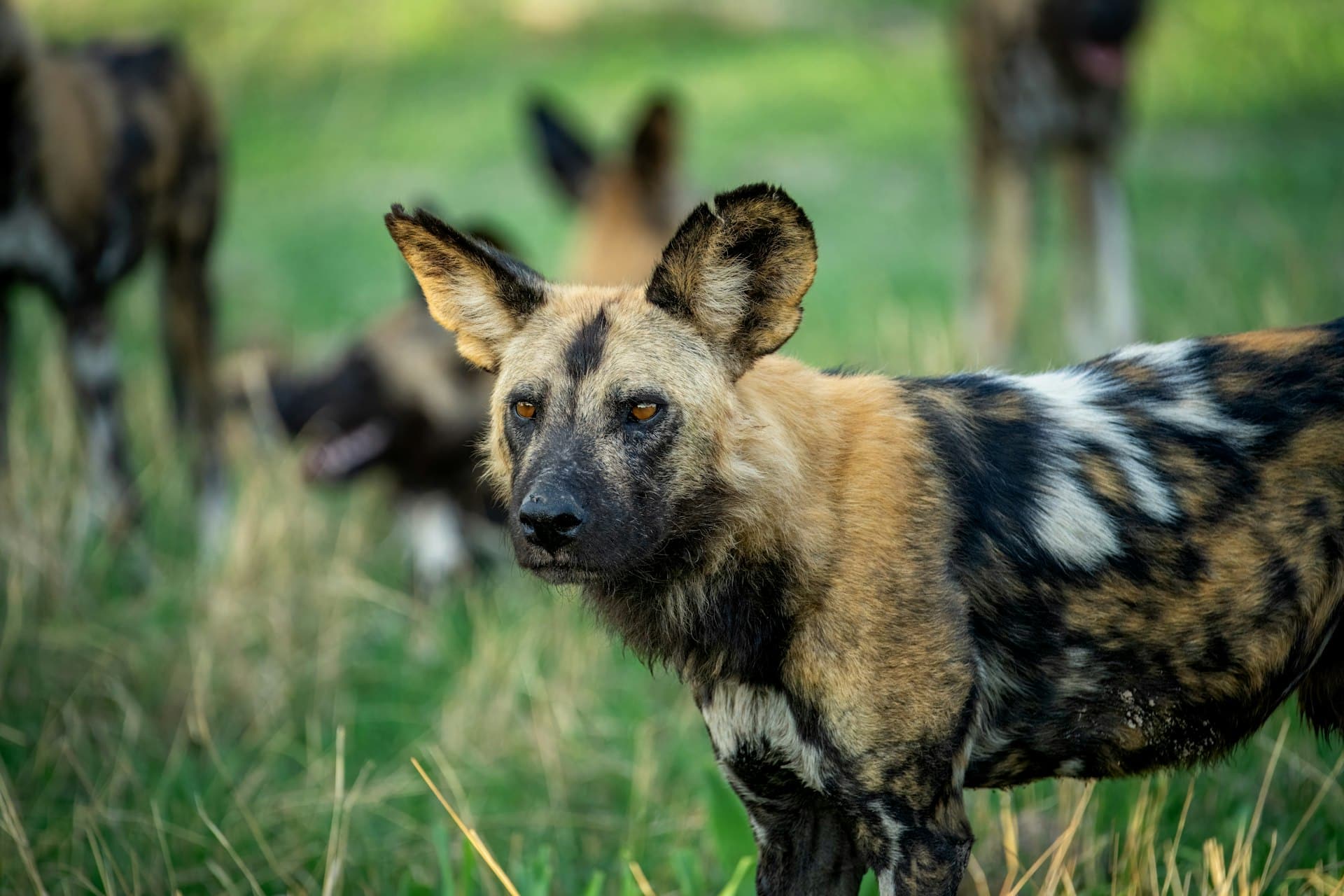
EN · EndangeredNo two wild dogs look alike. Each has its own patchwork coat of black, tan and white, along with oversized rounded ears and a white-tipped tail. Researchers use these unique patterns to recognise individuals across a pack.
Wild dogs live in close family packs led by a dominant breeding pair. They hunt together at dawn and dusk, running prey down over long distances, and are among the most successful hunters in Africa. Back at the den, pack members share food with pups and even with sick or injured adults.
The species is Endangered, with only a few thousand left in the wild. Packs range over enormous areas and suffer from disease and conflict with people, which makes the vast protected landscapes of southern Tanzania especially important.
Top tips for seeing wild dogs
Head south. Ruaha National Park and the wider southern circuit hold one of the most significant wild dog populations in East Africa, and they are far more likely to be seen there than in the busy north.
Packs are always on the move, so sightings are about luck and good guiding. Let your guide know you are keen — rangers and camps share news of a pack, and a flexible plan can make all the difference.
Early mornings are best. Wild dogs rest through the heat of the day, so you are most likely to find them active, greeting one another with excited twittering calls, just after sunrise.
Where to See Them
Ruaha is the place to look; packs are seen only occasionally in parts of the greater Serengeti.