- Habitat
- Open plains
- Weight
- 21–72 kg
- Diet
- Gazelles & small antelope
- Lifespan
- 10–12 years
- Top Speed
- Around 100 km/h
Scientific Name
Acinonyx jubatus
IUCN Status
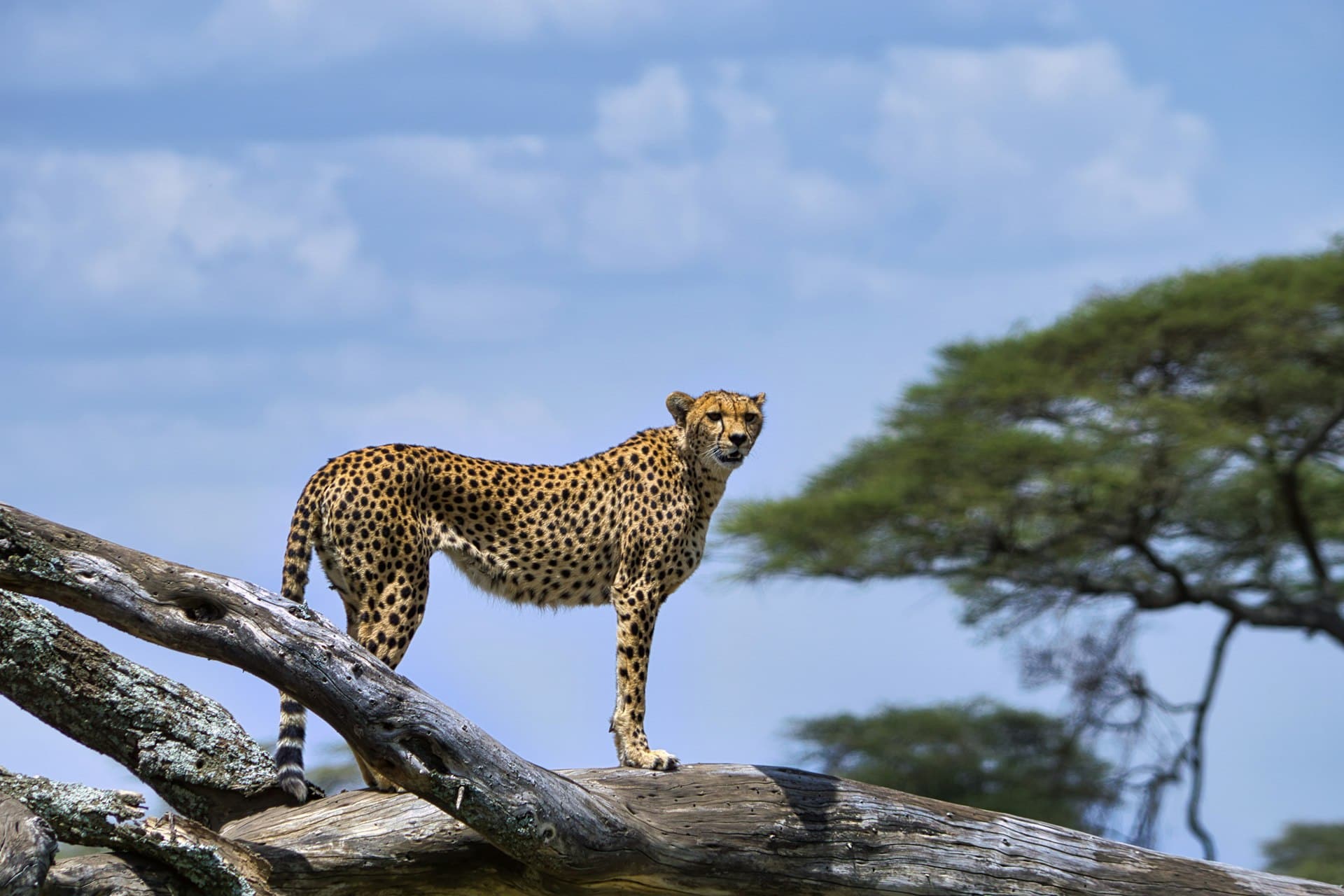
VU · VulnerableEverything about the cheetah is designed for speed: a light frame, long legs, a flexible spine and a tail that works like a rudder. In a short sprint it can reach around 100 km/h, but it can only hold that pace for a few hundred metres before it must stop and cool down.
Unlike lions and leopards, cheetahs hunt mostly by sight and by day, targeting gazelles and young antelope in the morning and late afternoon when larger predators are resting. The black “tear marks” running from eye to mouth are thought to cut glare from the sun.
Cheetahs are listed as Vulnerable. They need huge open ranges and lose many cubs to lions and hyenas, which makes Tanzania’s vast protected plains vital to their future.
Top tips for viewing cheetahs
Look for them on the short-grass plains of the southern Serengeti, especially between December and March when the migration herds and the gazelles that follow them gather to calve. The open country around Ndutu, on the edge of the Ngorongoro Conservation Area, is superb at this time.
Scan termite mounds, fallen logs and even the bonnet of a parked vehicle — cheetahs love a lookout. A cheetah sitting upright and still is often watching for prey, so it pays to wait: you may witness a chase.
Because they hunt in daylight, cheetahs are one of the few big cats you can reliably watch in action. Keep your camera ready on burst mode and let your guide position the vehicle well back so the hunt is never disturbed.
Where to See Them
The southern Serengeti plains are the classic cheetah country; Tarangire, Ruaha and the Ngorongoro area offer occasional sightings.