- Habitat
- Riverine woodland & kopjes
- Weight
- 30–90 kg
- Diet
- Antelope, primates & birds
- Lifespan
- 12–17 years
- Social Life
- Solitary
Scientific Name
Panthera pardus
IUCN Status
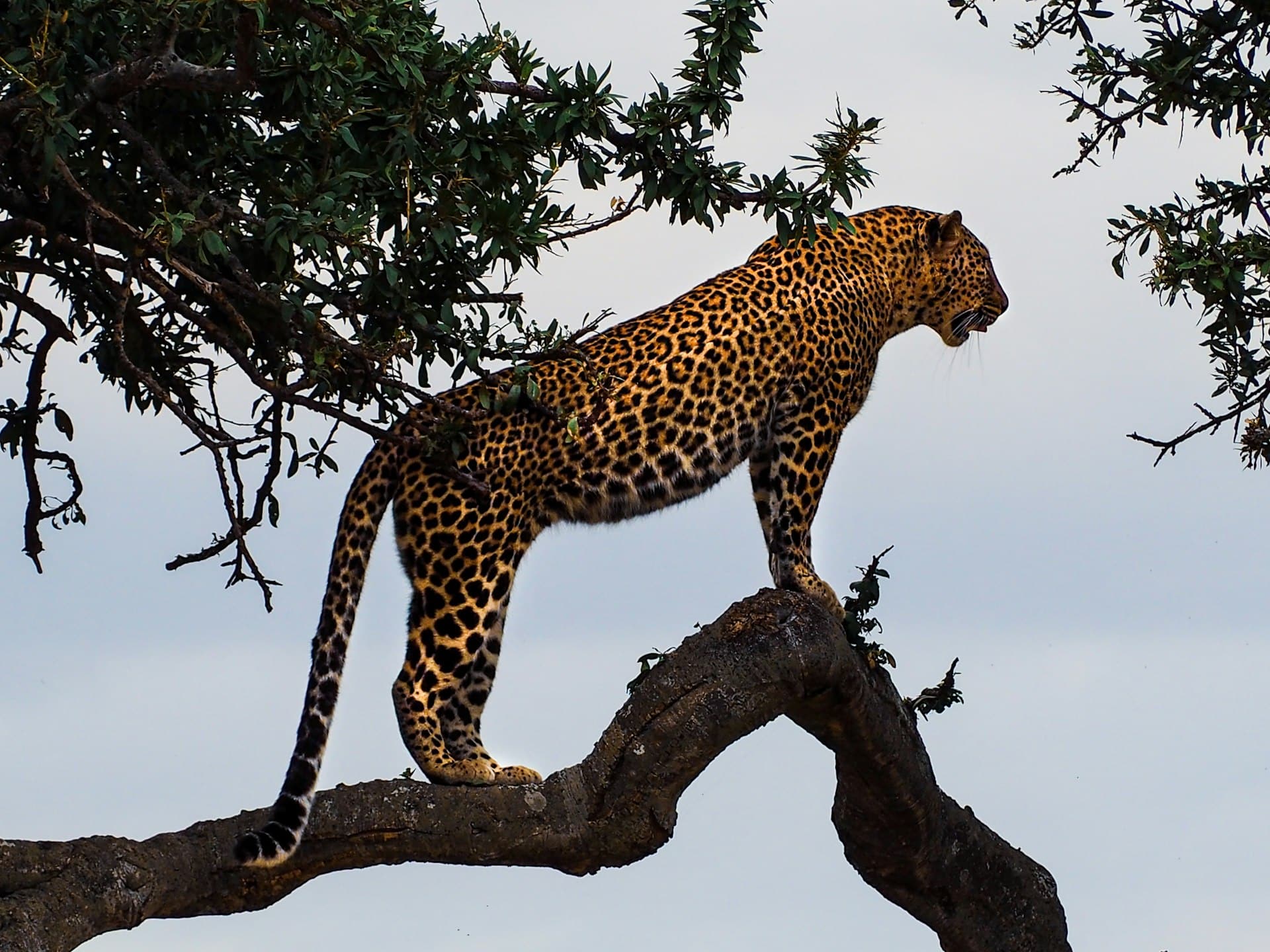
VU · VulnerablePound for pound the leopard is one of Africa’s strongest predators. It can haul a kill heavier than itself high into a tree, keeping its meal safe from lions and hyenas. Its rosette-patterned coat melts into dappled shade, which is why you can drive past one without ever knowing.
Leopards are solitary and largely nocturnal, doing most of their hunting at dusk and through the night. They are remarkably adaptable, living everywhere from riverine forest to rocky kopjes, and eat almost anything from impala to hares and birds.
The species is listed as Vulnerable, having lost much of its historic range to habitat loss and conflict with people. Tanzania’s large parks remain one of its great strongholds.
Top tips for finding leopards
Look up. In the heat of the day leopards rest in the branches of sausage trees, fig trees and large acacias, often with one leg or a tail hanging down. A carcass wedged in a fork is a sure sign one is nearby.
The Seronera Valley in the central Serengeti is one of the best places in Africa to see leopards, thanks to its tree-lined rivers and year-round prey. Tarangire and Ruaha are also rewarding, especially along their rivers in the dry season.
Head out early and stay out late. Leopards are most active around sunrise and sunset, and patience pays — our guides often share sightings over the radio, so a slow morning can turn in minutes.
Where to See Them
The Seronera Valley in the Serengeti is our favourite leopard territory, with Tarangire, Ruaha and Katavi close behind.