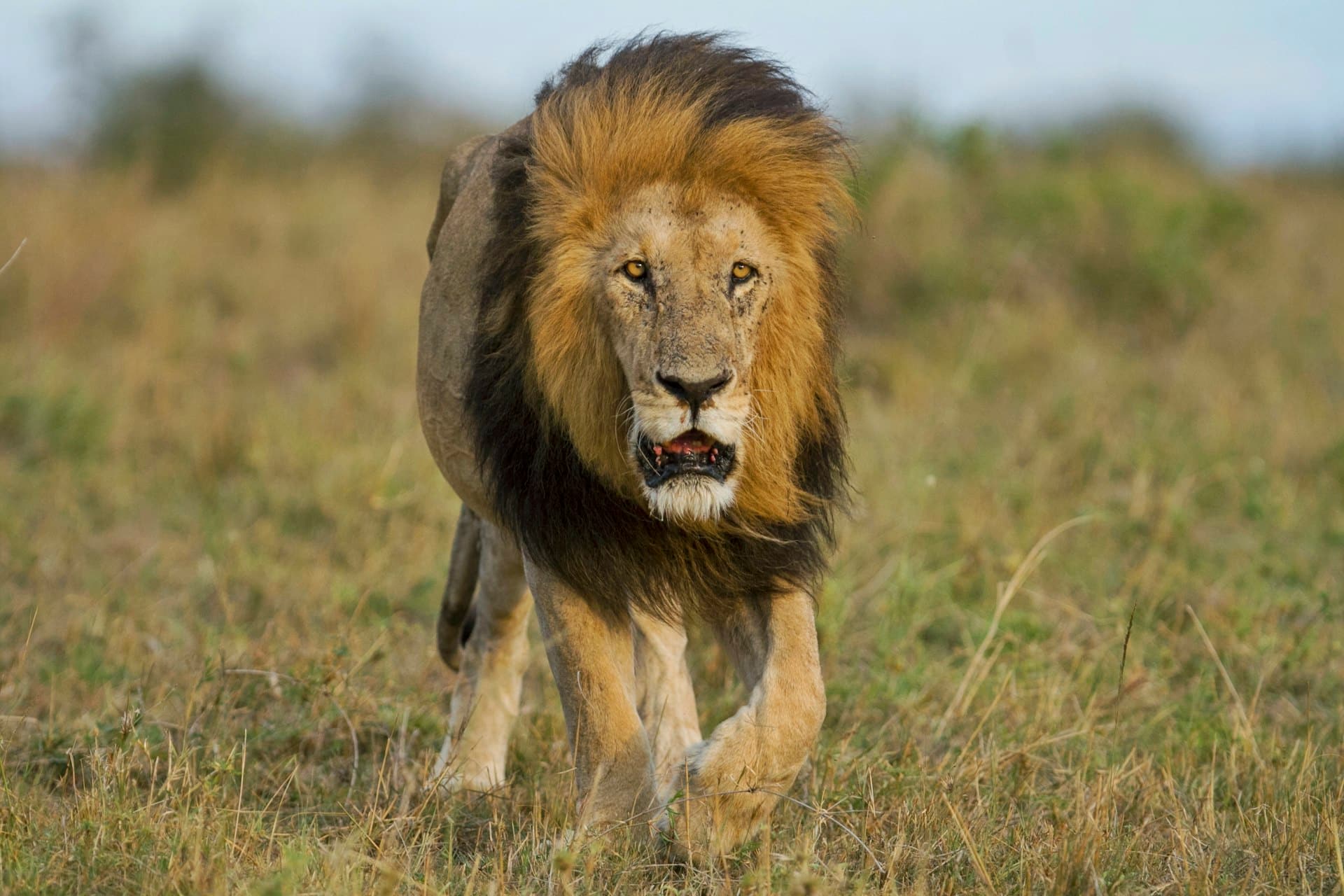
- Habitat
- Savanna & open woodland
- Weight
- 110–225 kg
- Diet
- Wildebeest, zebra & buffalo
- Lifespan
- 10–15 years
- Social Life
- Prides
Scientific Name
Panthera leo
IUCN Status
VU · VulnerableLions are the only truly social big cat. A pride is built around related females who hunt together and raise their cubs communally, while one or more males defend the territory — their roar can carry for several kilometres across the plains.
Most of the hunting is done by the lionesses, often at night or in the cool of early morning, working as a team to bring down wildebeest, zebra and even buffalo. By day, lions spend up to twenty hours resting, which makes them wonderfully easy to watch.
Although lions are listed as Vulnerable and have vanished from much of Africa, Tanzania still holds the largest population of any country. The Serengeti, Ruaha and Katavi are among the continent’s most important lion strongholds.
Top tips for viewing lions
In the Serengeti, lions are found year-round around Seronera, where resident prides lounge on the kopjes and along the rivers. During the migration they follow the herds, so ask your guide where the wildebeest are gathering.
Lake Manyara is famous for lions that rest in the branches of acacia and mahogany trees. Sightings are never guaranteed, but scanning the canopy along the park’s woodland tracks is part of the fun.
Arrive at first light to see prides active after a night’s hunting, and return in late afternoon when cubs play and the pride stirs for the evening. Switch off the engine, keep voices low and simply watch — lions are at their most relaxed around quiet vehicles.
Where to See Them
Lions live in every major savanna park on our routes — the Serengeti and Ngorongoro Crater are the most dependable.